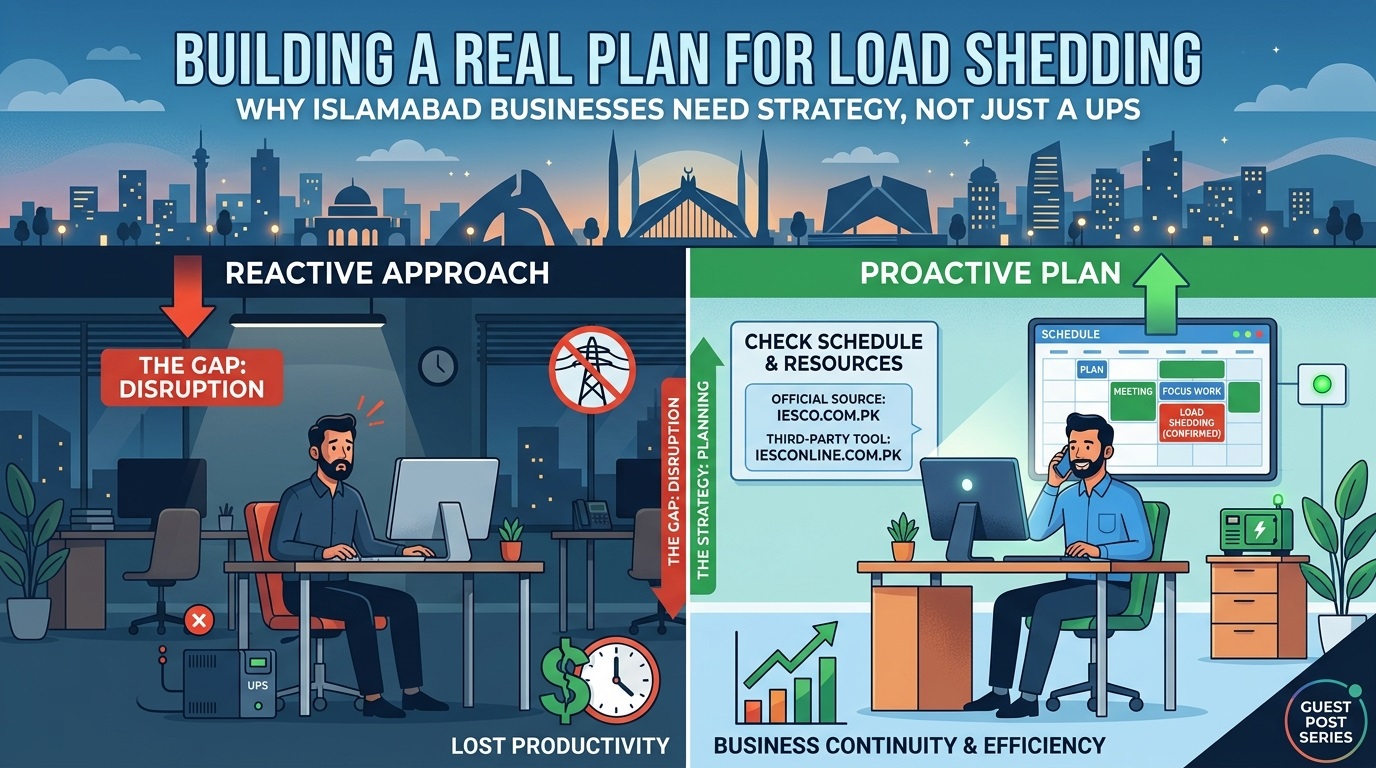
Faisalabad runs on manufacturing and trade, and both depend on power staying on when it’s supposed to. A knitting unit mid-run, a dyeing process that needs consistent heat, or a wholesale shop processing card payments during peak hours cannot tolerate a surprise outage gracefully.
Most business owners here already own a generator or a UPS system. That’s the easy part. The harder part—the one most businesses skip entirely—is actually knowing when the next cut is coming instead of just reacting once it happens.
That gap between owning backup equipment and using it wisely costs money quietly, month after month. Fuel gets burned on generators that didn’t need to run, staff scramble to save work that could’ve been finished before a scheduled cut, and machines get shut down mid-cycle in ways that shorten their working life. A lot of that waste disappears once a business starts checking the local outage schedule ahead of time instead of finding out the hard way.
Why Reacting to Outages Costs More Than Planning for Them
A generator kicking in after the power’s already gone is doing its job, but it’s also the most expensive way to handle load shedding. Fuel costs add up fast when a generator is only ever switched on in a panic rather than for a predictable window.
Machines matter here too. Power looms, dyeing units, and knitting machines don’t always handle an abrupt cut well. An unfinished cycle sometimes means wasted material, and restarting mid-process isn’t as simple as flipping a switch back on.
Wholesale and retail traders in markets like Ghanta Ghar or Jinnah Colony deal with a different version of the same problem. A card machine or a computerized billing system going down during a busy afternoon means either turning customers away or scrambling with pen-and-paper receipts that create extra work later.
What Advance Knowledge Actually Changes
Knowing roughly when an outage is expected shifts a business from reacting to planning. A dyeing unit can time a batch to wrap up ahead of the cut instead of leaving it half-done. A retailer can prep manual billing slips in advance rather than fumbling for them mid-transaction.
For manufacturing setups running machinery on tight production schedules, this matters even more. Knowing that window in advance means scheduling maintenance, changeovers, or lower-power tasks during that specific time, rather than losing productive hours to an unplanned stoppage.
This kind of planning also changes how a business uses its backup generator. Instead of running it reactively whenever the lights go out, it can be scheduled to start just before the cut is due, which uses less fuel overall since there’s no scrambling once the outage actually begins.
Different Businesses, Different Stakes
A small trading shop loses relatively little from a short outage—mostly some inconvenience and a few delayed transactions. The math changes fast for a manufacturing unit running continuous processes, where an unplanned stoppage can mean spoiled material, wasted labor hours, and a delayed shipment to a buyer waiting on the other end.
Textile exporters working against tight international shipping deadlines feel this the most. A missed production day because of unplanned outages can push a shipment past its deadline, and buyers overseas don’t generally accept load shedding as an excuse for a late container.
Smaller service businesses—tailoring shops, printing presses, and small workshops—sit somewhere in between. They can usually absorb a short cut without major loss, but repeated unplanned interruptions across a busy week add up to real lost output by month’s end.
Building Outage Awareness Into Daily Operations
None of this needs new software or a dedicated employee. Whoever already handles daily operations—a shop supervisor, a production manager, or the owner themselves in a smaller setup—can check official local schedules as part of the existing morning routine.
For quick reference, businesses can track local feeder schedules and billing updates on third-party tracking portals like https://fesco-onile.com.pk/, or cross-check official announcements directly through the official Faisalabad Electric Supply Company website at https://fesco.com.pk
.
For manufacturing units running multiple shifts, it’s worth building this into the shift handover process specifically. A supervisor starting the evening shift benefits from knowing whether a cut is due during that window before committing machines to a long production run.
Businesses operating from more than one location across Faisalabad should check each site separately, since outage timing can differ meaningfully depending on which feeder and grid station serves a particular area, even within the same city.
Getting More Out of Existing Backup Equipment
None of this is an argument against having a generator or UPS. Backup power still matters for the outages nobody can predict: equipment faults, emergency load shedding beyond the announced schedule, or grid issues that hit without warning.
The point is combining that backup capacity with actual planning rather than treating equipment as the entire solution. A business that both owns backup power and checks the schedule regularly ends up spending less on fuel and losing less production time than one relying on equipment alone.
It’s worth revisiting this occasionally rather than setting a routine once and assuming it stays accurate. Faisalabad’s outage patterns shift noticeably between seasons, and a schedule that held up fine in winter often looks very different once summer demand pushes cuts longer and more frequent.
A Note for Businesses Choosing a New Location
Owners scouting a new unit, warehouse, or shop in Faisalabad rarely think about outage patterns when comparing locations, even though it can genuinely affect production output. Two plots on opposite sides of the same industrial area can sit on different feeders, with noticeably different load shedding frequency between them.
It’s worth asking directly, or checking independently, before signing a lease or finalizing a purchase—especially for a business where continuous power actually matters, like a cold storage unit, a dyeing line, or machinery that doesn’t tolerate abrupt restarts well. A landlord’s casual assurance that “this area doesn’t get much load shedding” is worth verifying rather than taking at face value, since the person selling the property has little reason to know the actual feeder-level outage history.
Final Thought
Load shedding is simply part of running a business in Faisalabad, and no amount of backup equipment removes that reality entirely. What actually changes the outcome is pairing that equipment with a habit of checking the outage schedule before it disrupts a production run, a busy sales afternoon, or a shipment deadline that can’t slip.