
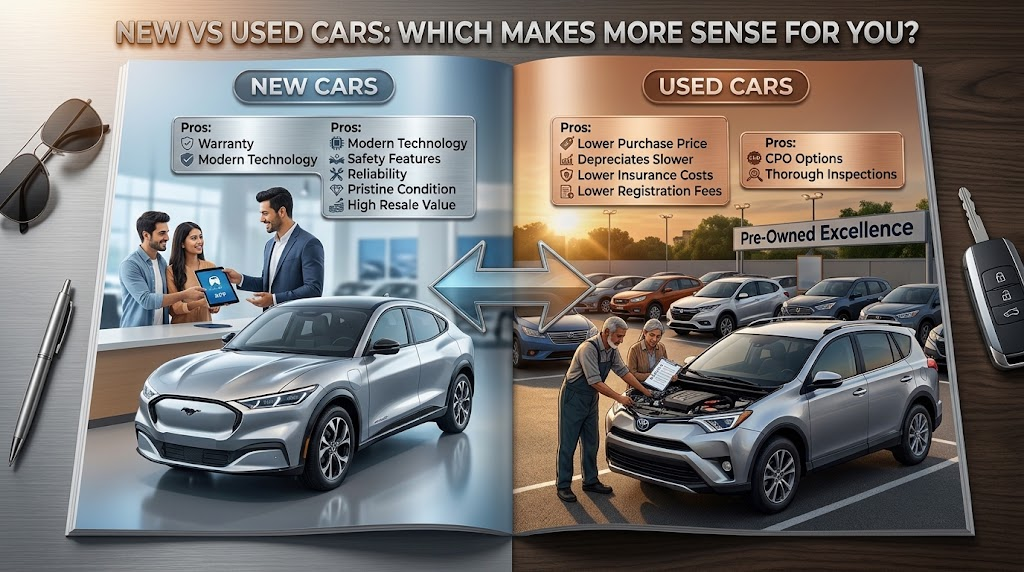
Buying a car is one of the biggest financial decisions most families will make. Whether you are a first-time buyer or planning an upgrade, the same question comes up: should you pay more for a brand new vehicle or save money with a used one? There is no single right answer. The best choice depends on your budget, your daily needs, and how long you plan to keep the car. Let’s look at both options so you can decide with confidence.
The Case for Buying a New Car
A new car offers peace of mind. You are the first owner, so you know exactly how the vehicle has been driven and maintained. There are no hidden accidents, no tampered odometers, and no mystery repairs.
New cars also come with a manufacturer’s warranty, which usually covers major mechanical problems for a set period. This means fewer unexpected repair bills in the first few years. You also get the latest safety features, better fuel efficiency, and modern technology such as touchscreens, parking sensors, and driver assistance systems.
Financing is often easier too. Many banks offer car leasing and installment plans designed specifically for new vehicles, with structured monthly payments.
The biggest drawback is depreciation. A new car loses a noticeable portion of its value the moment it leaves the showroom, and the loss continues over the first few years. If you sell early, you may get back much less than you paid. In some markets, buyers also face waiting periods or pay an extra premium (known locally as “own money”) to get early delivery.
The Case for Buying a Used Car
The main advantage of a used car is price. Since the steepest depreciation has already happened, you can often buy a higher-spec or better-brand vehicle for the same money you would spend on a basic new model. Insurance and registration costs may also be lower.
Used cars also give you more variety. With a limited budget, you might find a well-maintained sedan from a reliable brand that would be out of reach if bought new. Many buyers also like that a used car is available immediately, with no waiting list.
The downside is uncertainty. A used car may have a hidden history, worn parts, or deferred maintenance. Repair costs can add up, and warranty coverage is usually limited or non-existent. Without proper checks, a cheap deal can quickly become an expensive mistake.
Understanding the Market Before You Decide
Market conditions play a big role in this decision. Car prices in Pakistan have shifted considerably in recent years due to currency changes, import duties, taxes, and supply chain issues. At times, used cars have held their value surprisingly well because new vehicle supply was limited, and in some cases they sold close to the price of new ones. Before you commit, compare current showroom prices with used listings for the same model and year. If the gap is small, a new car with a warranty may be the smarter purchase. If the gap is large, a used car could save you a significant amount.
Key Factors to Weigh
Budget: Look beyond the purchase price. Include fuel, insurance, tokens, routine servicing, and possible repairs in your monthly calculation.
Ownership period: If you plan to keep a car for eight to ten years, a new vehicle often makes sense because you benefit from the warranty and reliability for longer. If you change cars every two or three years, buying used can limit your depreciation losses.
Usage: A car used mainly for short city trips has different requirements from one used for long highway drives or business travel. High daily mileage may justify the reliability of a new model.
Maintenance comfort: If you are not familiar with car mechanics and prefer a worry-free experience, new is usually the safer path. If you have a trusted mechanic, used becomes more manageable.
Resale value: Popular brands with strong demand generally hold value better, whether you buy new or used.
Tips for Buying a Used Car Safely
If you decide to go the used route, a careful approach protects you from costly surprises:
- Check the original documents, including the registration book, transfer papers, and token tax receipts.
- Verify the engine and chassis numbers against the paperwork.
- Ask for service records to understand how the car was maintained.
- Take it to a trusted mechanic for a full inspection before paying.
- Look for signs of repainting, rust, or accident repair.
- Test drive on different road types and listen for unusual noises.
- Negotiate based on the inspection findings.
Never rush the process. A seller who pushes you to decide immediately is often a warning sign.
Where to Search and Compare
Whichever option you lean toward, research is your best tool. Online platforms such as Just Cars make it easier to check car price information, compare models, and understand what fits within your budget. Looking at several options side by side helps you spot fair prices and avoid overpaying.
So, Which One Should You Choose?
Choose a new car if you value reliability, warranty protection, modern features, and long-term ownership, and if your budget can handle the higher upfront cost and depreciation.
Choose a used car if you want better value for money, are comfortable doing proper inspections, and prefer to avoid heavy depreciation.
In the end, the smartest purchase is the one that fits your finances and lifestyle, not just your wishlist. Set a realistic budget, research the market, inspect carefully, and take your time. A well-informed decision will serve you far better than a rushed one, no matter whether the car in your driveway is brand new or pre-owned.