
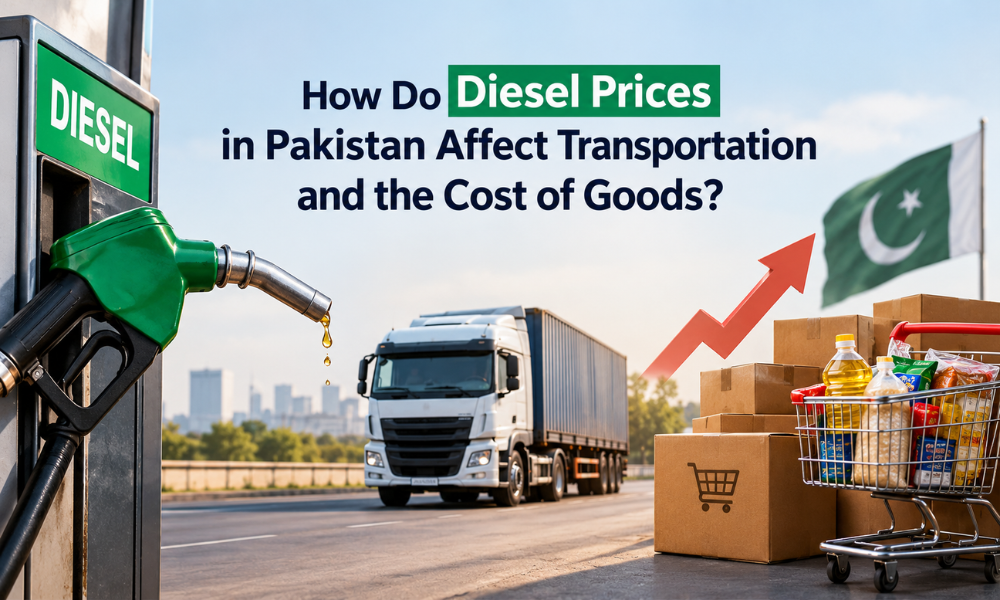
Diesel plays an important role in Pakistan’s transportation and supply chains. Trucks use it to move goods between cities, while buses and other commercial vehicles rely on diesel to carry passengers. When diesel prices change, the effects can extend beyond transport operators to businesses, retailers, and everyday consumers.
Understanding this connection helps explain why diesel prices matter to the wider economy and how changes in fuel costs can influence the movement of goods across the country.
Why Is Diesel Important for Pakistan’s Economy?
Diesel powers a large number of commercial vehicles used to transport agricultural produce, construction materials, industrial supplies, and consumer products. It is also used by various businesses and machinery operating in agriculture and other sectors.
Pakistan depends heavily on road transportation to connect farms, factories, warehouses, markets, and retail shops. Fuel costs are therefore an important part of the expenses involved in moving goods from one place to another.
When fuel prices in Pakistan change, transport businesses may need to review their operating budgets, particularly if fuel represents a substantial share of their total costs.
How Do Diesel Price Changes Affect Transportation Costs?
Fuel is one of the main operating expenses for many trucking and logistics businesses. A truck travelling long distances consumes substantial amounts of diesel, making its operating costs sensitive to fuel-price changes.
When diesel prices rise, the cost of completing a delivery route may increase. Transport operators must account for this alongside expenses such as vehicle maintenance, drivers’ wages, tolls, and insurance.
Some businesses may absorb the additional costs, while others may negotiate new delivery rates or adjust their charges. The final effect depends on contractual agreements, competition, vehicle efficiency, and the distance travelled.
When diesel prices fall, transport businesses may experience some relief. However, lower fuel costs do not automatically translate into lower delivery charges because other operating expenses remain.
Can Higher Diesel Prices Increase the Cost of Goods?
Diesel prices can influence the cost of goods because products often travel through several stages before reaching consumers. Agricultural produce, for example, may move from farms to wholesale markets, then to distributors and retail shops.
If transportation becomes more expensive at different stages, businesses may face higher distribution costs. Some may pass part of these expenses on to customers, while others may reduce their profit margins or find ways to improve efficiency.
The impact varies between products and industries. Perishable goods that require frequent or time-sensitive deliveries may face different logistical challenges from durable products that can be stored and transported in larger quantities.
It is also important to recognise that diesel prices are only one factor affecting retail prices. Production costs, seasonal supply, exchange rates, taxes, and market demand can also influence what consumers pay.
How Can Transport Businesses Manage Rising Diesel Costs?
Transport operators cannot control market fuel prices, but they can take practical steps to improve efficiency and manage operating expenses.
- Plan delivery routes carefully: Efficient routes help reduce unnecessary distance and fuel consumption.
- Maintain vehicles regularly: Proper tyre pressure, timely servicing, and well-maintained engines can support better fuel efficiency.
- Monitor fuel consumption: Comparing fuel use across vehicles and routes can help identify unusual consumption and operational problems.
- Improve vehicle utilisation: Where practical, combining deliveries and reducing empty return journeys can make better use of fuel.
- Review operating budgets: Regularly reviewing fuel expenses helps businesses prepare for price changes and assess delivery costs.
These measures may help control expenses, although actual savings depend on the vehicles, routes, loads, and operating conditions involved.
Where Can Businesses Check Diesel Prices in Pakistan?
Keeping track of fuel-price revisions can help transport operators estimate operating costs and review their budgets. It can also help businesses understand whether changes in fuel expenses may affect their delivery arrangements.
For current fuel-price information, businesses and consumers can visit Petrol Price Pakistan. Checking the latest available diesel rates can provide a useful starting point when estimating transportation expenses and planning future deliveries.
Conclusion
Diesel prices in Pakistan matter because they influence the cost of operating commercial vehicles and moving goods across the country. Changes in fuel expenses can put pressure on transport businesses and may affect the prices consumers pay, depending on wider market conditions.
By monitoring fuel prices, maintaining vehicles, and improving delivery efficiency, businesses can make better-informed decisions and manage transportation costs more effectively.